-
Landon Knack: What a Year!

At the beginning of the last season, right-hander Landon Knack had a pretty good idea that he was going to make his MLB debut. He was obviously super excited to get the season started, but little did he know what was ahead.
Of course, everyone knew the Dodgers had a very good chance to win the World Series, but, it’s one thing to have that thought or idea. And as plausible as that may have sounded, it’s a totally different thing for it to actually happen. Especially when you find yourself sitting in a bullpen in the middle of New York City when you realize what is getting ready to happen.
Success is Nothing New

Courtesy of Walters State Baseball Knack grew up in Johnson City Tennessee, went to one of the most powerful Jucos in College Baseball at Walters State, then finished his college career at East Tennessee State. Then, after an incredibly successful Collegiate career, where he set one strike-out record after the other, he was drafted in the 2nd Round of the 2020 draft.
He immediately entered the system as a top prospect, and, after fighting through some injuries and a long stay at the AA level, he finally arrived last year.
And, it was all he ever dreamed about.
Yeah, obviously the expectation was that I assumed I would debut sometime during the year, so the expectation was to come out and compete for a job. With what the year ended up becoming it obviously exceeded my expectations, and I basically split the year up there.
I was able to make the Post-Season roster, win a World Series, and, obviously when you do that, it surpasses all your expectations you have for your Rookie Season.
Be In The Moment

One of the things the Dodgers teach their prospects is to be in and stay in the moment. With as much shuffling as they do with their roster, prospects like Knack have to know where their feet are at for any one given day, and be there, in that moment, not wishing they were somewhere else.
That’s something that’s sounds great, but is much harder to do when you’re stuck in AA, or back in AAA after experiencing the thrill of a Major League environment. But, it’s a process that Knack mastered, so when he finally got his shot, he made sure and took it all in.
When asked if he ever had the chance to take a step back and take a moment to appreciate what was happening, here’s what he said.
I think I had that moment in my debut. I kind of just looked up at the top deck before we got going, and was like, alright, we actually made it. I let the moment sink in a little bit, so it started to hit a little bit then.
Then, as the season went on we definitely thought about how far we had come in a short time in the last couple of years.
World Series Championship

Photo by Elsa/Getty Images From the first time any young kid picks up a ball or a bat, it’s a dream to play in the Major Leagues, it’s a dream to play in the World Series, especially in Yankee Stadium, and it’s a dream to play for such an iconic brand like the Dodgers.
For Knack, when he took the mound and saw Juan Soto, Aaron Judge, and Giancarlo Stanton, it actually gave him a sense of calmness. In fact, the way he described it was that it just kind of felt normal to him, and especially after some of the Veterans game him some good advice.
Blake and a bunch of the guys had done a really good job of talking to me about the moment and just embracing it, and understanding that you don’t have to do anything extra. They made me realize all I had to be was myself.
Once that final pitch was thrown, it was just a wave of emotions that I still haven’t been able to wrap my head around. It was pure craziness, and I just kind of looked around to take it in, and it was just surreal.
Bullpen Game

Photo by Luke Hales/Getty Images Knack was thought to be the logical starter in game 4 of the NLDS when the Dodgers were down to the Padres 2 games to 1. Although the organization eventually chose a bullpen game, Knack still got to close the game doing a great job getting the last 3 outs to send the series back to L.A.
Knack is one of the most competitive people on the planet, so, of course, he wanted the ball to start the game, and here’s what he had to say about that situation.
I didn’t really know how to prepare for that day, to be honest. Throughout the entire week, I thought I was going to start that game, but the way the series went they decided to opt with the bullpen game. Which, of course, as good as our bullpen had been I still don’t blame them one bit to this day. Obviously I wanted the ball, but we saw how that worked out when the “Dawgs” shut that game down.
So, I was kind of sitting there not really knowing what to expect, because once the game actually started I didn’t really know when I was coming in. So I was just trying to stay ready, and then once we started to build a lead I started moving around a little to get going.
As the game went on our bullpen coach told me that if we scored 1 more I was in, and because of how late it was I didn’t have time to think about it much, so we just got the body moving, got out there and went.
World Series

One of Knack’s biggest contributions came in the only game the Dodgers lost in the World Series. Knack came in Game 4, in a 1-run game stabilized the game, and gave the Dodgers a chance to win that game. But, even in not doing so, he kept the entire rest of the bullpen fresh for Game 5, the game that clinched the World Series title for the Dodgers.
I took a lot of pride in that. I was just trying to hold it down to give us a chance to win that game, which was the main thought. But, of course, also at the same time I’m trying to eat as many innings as possible because I knew we weren’t going as deep into our bullpen that game. We were trying to save the bullpen to make sure the next day we were 100% ready to go and have all of our high-leverage guys ready, so to be able to save the “Dawgs”, I take a lot of pride in that.
-
The Roster Crunch and the Prospects?

Who Gets Squeezed?

Of course, the Dodgers could also just not replace any of the 60-day IL guys, or at least not all of them, but that still doesn’t help with the roster flexibility piece to the puzzle. One way in which the Dodgers have gained an advantage is by using the AAA up/down train to constantly keep the MLB club stocked with fresh arms. Having Shohei Ohtani helps that situation because he allows the Dodgers to legally carry 14 pitchers, which allows for a 6-man rotation, so, maybe the up/down train won’t be needed as much in 2025.
But, the Dodgers are the kings of transactions, so don’t bet on it.
The players that get squeezed the most in this scenario are all of the pitching prospects, and then James Outman and Andy Pages. Both Outman and Pages have flashed lots of talent, but haven’t had the opportunity to truly prove whether or not they can be consistent.
And, here’s the problem.
Both Pages and Outman only have one more option year, so, after 2025, they can’t be sent back down to the Minor Leagues. So, they will either have to be put on the active roster and left there or moved. And, it appears that at-bats this year may be hard to come by for those two considering the Conforto signing, combined with Edman and Teo in the outfield. And, adding to that is Chris Taylor who can play outfield, as well as Kike Hernandez whom they will likely sign.
So, as things stand, both Pages and Outman will have a limited MLB track record to showcase after this season.

Photo Credit: Ashley Landis / Associated Press Having a limited MLB track record and no Minor League options is THE worst-case scenario in terms of value for a young player, because it’s like being upside down on a car or a house. And, as talented as those two young men are, that situation will not be very attractive to other clubs, so, at that point, the Dodgers would just have to hope they perform well enough to stay on the 26-man roster.
Both are very capable, but still, a situation that a club would like to avoid. So, finding consistent at-bats for both Pages and Outman, one way or the other, would be, in my opinion, very beneficial. How to get that done, I have no solution, but, one thing we know is that there is no other organization that is more creative in solving these puzzles.
-
The Roster is Full: What Next?

Click to watch the latest Dodgers Dawgs Episode
In Major League Baseball, each club has a 26-man roster which is the active roster, and then also a 40-man which is the roster of the available players that could be added to the active roster at any given time.
Being the off-season, the roster that is talked about the most is the 40-man, because there is no need for an “active” roster because there are no games being played. The only time you may hear about the “active” roster, or 26-man, is in reference to having enough players on the 40-man that have Minor League options to be sent down.
Just doing simple math, for the numbers to work, at least 14 players on the 40-man have to have Minor League options, which is why players that have those options are usually always kept and valued. And, it’s also why players like Brent Honeywell, who didn’t have Minor League options, get cut.
Even further than that, no club wants to be stuck with a roster of 26 players with none of them having Minor League options. If that were the case, the club would have no ability to bring guys up and down from AAA when fresh arms are needed, a tactic the Dodgers use a lot.
That is, short of manipulating the injury rules, something the Dodgers also SEEM to do quite a bit as well.

So, that context is being used to help understand what it means that the 40-man roster is now at 40, which means it’s 100% full. Of course, that means that no one can be added, but, yet, we still hear that the Dodgers want to re-sign Clayton Kershaw and Kike Hernandez, and then also sign Roki Sasaki as well.
But, how can they do that if the 40-man roster is full? That’s the topic of today’s article
Additions?

Mandatory Credit: Denis Poroy-Imagn Images / Denis Poroy-Imagn Images But, what if the Dodgers want to make additional acquisitions, like maybe Tanner Scott, or Ha-Seong Kim? How would they be added? For any new acquisition to sign before Spring Training, it would either require a trade, where someone on the 40-man roster would be moved, or a player would have to be Designated for Assignment.
The Dodgers just won the World Series, so it’s very unlikely, and totally out of brand for them to DFA veterans that have been in the system and helped win multiple World Titles. So, the possibility of that happening is there, but not likely.
So, that leaves the avenue of trade. That possibility is the much more likely scenario because it means the Dodgers aren’t just having to cut someone that has had great value to the organization, with basically no return.
Wish List

We all have our own wish list, but rarely do we ever get everything we want. But, heading into the off-season, I think most Dodgers fan’s lists would have included an ace-level starter, a high-end reliever, and a home run-hitting outfielder. Blake Snell fills the bill for the Ace, Blake Treinen definitely is a High-end reliever, and Teo Hernandez certainly is a slugger.
The Dodgers also added a Wild Card in Michael Conforto who was once considered to be one of the best sluggers in the game. Injuries have slowed down that roll, but there is no question that he still has a ton of talent to tap into, so that’s exciting as well. Especially considering the Dodgers signed him to a 1-year deal, so there is almost no risk to it if he doesn’t do well in Dodger Blue.
So, to this point, this off-season has gone just about perfectly, but, the Dodgers likely aren’t done. So, what else would you “want” the Dodgers to add, with the keyword being”WANT” and not “NEED”?
-
Teo is Back: What Took So Long?

Deferrals
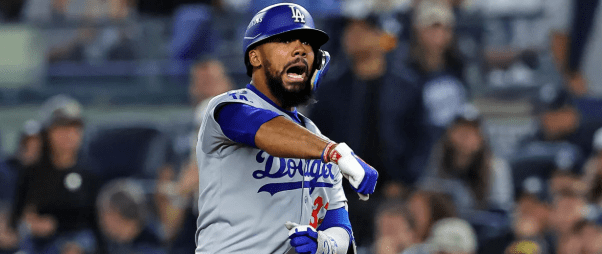
Photo by Brad Penner-Imagn Images Adding deferrals to a player’s contract seems like a new idea, but it’s been happening for quite some time, I.E. Bobby Bonilla. The Dodgers do seem to have made it more of a common practice, however, than maybe what most of us have been accustomed to though.
Deferring money on players’ contracts has different layers of value. First, and most importantly, it can work to reduce the Average Annual Value of a player’s contract (AAV), which helps with the CBT (Competitive Balance Tax).
It’s an alphabet Soup of complications, that’s for sure!
In a nutshell, if the deferred money acquires a certain amount less interest than the Annual Federal Mid Term threshold, then whatever amount is below that threshold can be deferred. So, $70 Million per year can turn into only $45 or $50 Million counting towards the CBT (luxury tax).
That allows clubs like the Dodgers extra financial flexibility to acquire other players while also doing the least amount of damage in terms of CBT penalties.
The Player

Photo by © Wendell Cruz-Imagn Images So, now that we have all of that complicated business nonsense out of the way, you might be asking, why would a player want to defer money? Especially knowing that inflation is going to make their contract less valuable by the time they receive their money.
One reason is it allows clubs to pay more for an overall contract. So, for instance, if Shohei Ohtanis’s contract only counts $45-$50 million per year against the CBT, then that likely is all he would have gotten paid if not for the deferrals. So, because of the deferrals, the Dodgers were, in essence, able to give him back the difference in what they saved towards the CBT ($20-$25 Million per year). And when they added that total to the amount they were willing to pay towards the CBT ($40 to $45 Million per year), it equated to $70 million per year.
It’s a win/win in that scenario, because the player gets paid more, and clubs get a discount towards the CBT.
But, that’s not always the case.
-
Why Haven’t the Dodgers Signed Teo

-
Evan Shaw: Calm, Cool & Collected

Always Been Great

There’s an old saying that “Bad Dawgs bite when they’re pups” and there could be no truer words to describe Shaw. As a Freshman, he set his High school record for wins in a single season, beating out, yes, his Uncle, who had set that record several years earlier. Truth truly is crazier than fiction, because you can’t make that kind of stuff up.
Nor do you have to make up the fact that Shaw also threw 2 no-hitters while in High School, and would have had a perfect game in the 2nd one, but he hit the very FIRST hitter of the game. Then threw a perfect game from there.
That was super exciting because I had no idea until the end of the season that my Uncle held that record, and I had no idea that I had broken it. My Uncle was super stoked and super proud.
His Uncle Dennis was obviously a great player in his own right, but Shaw also had a grandpa who played professionally and had a huge influence on his career as well.
My Grandpa Jack has had a big impact on my career. He’s such a smart guy in life and in baseball and I can talk to him about anything, and it’s been a blessing to have him at my games.
Shaw had a fairly legendary prep career at Fridley High in Minnesota where he went 32-8, had an ERA of just 1.39, 347 Ks, 2 no-hitters, and set the school’s all-time wins for a season.
The Winding Road
 After that legendary career, he took his left-handed talents to Minnesota State where he spent the Covid year, and, as a result, pitched only 5.1 innings. He then transferred to Cochise College where he spent the next 2 seasons.
 After putting together a first-team All-ACCAC season in 2023 where he recorded 184 Ks in 129 IP, he then transferred to KU for last season, 2024.
He spent last year, his Junior year, at the top of the rotation for the Jayhawks before getting drafted in the 16th Round last Summer (2024). Shaw did have a year of eligibility left, but he dove back into the wisdom of those around him and chose to go pro. Once College players have lost all their eligibility, they lose all their leverage because they have nowhere else to go. So, it is very wise to leverage having the ability to come back into the best deal possible and then take it.
I didn’t think I would ever find myself in the middle of Arizona like I was at Cochise, but I’m happy that it did happen because it was the best thing to happen to my baseball career.
When I got to KU their game plan in terms of trying to develop is something I wanted to be a part of. They made me feel at home and welcome when I went on my visit. It felt like a new home and getting to talk to the coaches, they made it seem that they were putting together something special. It was a blessing to be a part of that and I am very thankful for them, because it was like a family and we were all playing together.
In his last outing at KU Shaw shoved against KState, a game I got to see at Globe Life in Arlington as part of the Big 12 Tournament, as he led his Jayhawks to victory over their arch-rival Kansas State.
Then he got drafted in the 16th Round last summer and made the hard decision to leave Lawrence.
Going back for my Senior year I felt like I would lose some leverage, so that was a big factor, and, honestly, I was just ready to go pro. I got the opportunity and it’s been a dream since I was a kid, so finally having that opportunity come to light, I was super thankful to everyone at KU, but I just wanted to get my pro career started.
Pro Career Gets Started
 Shaw was drafted in the 16th Round of last summer’s draft (2024) and it didn’t take the organization long to send him to affiliated ball. He got to Rancho in late August and in just his 2nd appearance was immediately sent into the fire by being put in a game with the bases loaded and just 1 out and the game on the line. After giving up a sac fly on his 3rd pitch, he then finished the rest of the 8th scoreless before recording his first win as a pro by throwing up a zero in the 9th.
 August 31st will be a day he will always remember as well as September 4th, just a couple of days later when he recorded his first save as a pro.
When asked what his coolest moment as a pro so far has been, this is what he had to say.
I’d say getting the first save in my 2nd outing because the game was tied in the 8th when I came in, and then a guy got a sac fly. But I was able to minimize it, then the guys scored 3 in the top of 9, and it was awesome being in that same situation.
Elijah Hainline made a huge play for the 2nd out, and then being able to get the last out to close it out was huge and it was an unbelievable feeling.
Pitch Mix and Approach
Everyone in professional baseball is talented, so sometimes the difference between one prospect advancing over the other is that they have something that is unique or different. Shaw has all the typical underlying metrics you’d want in a left-handed pitcher, but he also has one pitch that stands out above others, his sweeper.

Click to watch Shaw in action while he’s talking about his sweeper Sweeper: Shaw’s sweeper is unique because it breaks almost straight sideways, and registers negative vertical breaks. That’s a pitch that is going to be very effective against any hitter with a North/South bat angle or swing plane, which is seemingly every professional hitter of this generation.
He’s thrown that sweeper for basically his entire pitching career, dating back to his little league days, and it’s been his “go-to” strike-out pitch. Beyond the crazy break of the pitch, it’s also effective because he tunnels it off of his fastball, so hitters have a harder time identifying the pitch and making good swing decisions on it.

Click to Watch Shaw in action while he talks about his entire pitch mix and how it works together Entire Pitch Mix: Shaw also throws a cut fastball and a circle change. He hasn’t thrown his change up as much in games because it’s still somewhat in development, but is looking to use it more because having a reliable 3rd pitch will make him more effective.

Click to watch Shaw in action as he talks about the style of pitcher he is Style: Shaw has been more of a finesse pitcher, but is topping at 95, and definitely has room to grow. It’s a perfect setup because he’s always had an execution focus, and as he adds velo, could also become somewhat of a power pitcher too. Power pitchers with an execution focus are rare, especially when they’re left-handed and stand 6’4″.

Click to watch Shaw in action while talking about the biggest adjustment the Dodgers have made with him. Adjustments: The Dodgers, as they always do, broke down Shaw and his mechanics, and have added a little more counter-rotation to his motion. The added counter rotation should add efficiency by syncing up his body with his arm angle, and it should also give him more power.
Excited About the Future
Shaw is 6’4″, he’s left-handed, has the ability to grow velocity, is incorporating a change-up, and is eager to learn any new way that may help. Those types of prospects, the ones that have great size and ability, but then, also are so open to new ways to improve tend to embrace the process of finding their best version. And, when prospects maximize their potential, that’s when they give themselves their best shot to make the Major Leagues, something we hope happens for Shaw in the not so distant future.
Become a subscriber to our Dodgers Daily YouTube page and follow us on Twitter @dodger_daily, on Instagram @dodger.daily, on TikTok @dodgers_daily, or on our new discord server by following this link, https://discord.gg/zFM3yYCv.
Also, please consider donating to our Live Dodgers Dawgs shows to help Dodgers Daily keep growing. We go live every Sunday & Wednesday Evening at 5:00 Pacific, and we’d love to have you join the chat. This site will always be free to its viewers, but it does take time and money to run, so any sized donation would be greatly appreciated.
-
Alex Makarewich

Background
 Makarewich was born in Santa Monica, but moved to the DFW metroplex fairly early in his life and ended up going to Keller, which is the same High School that Max Muncy also graduated from. Shea Langaliers hails from that powerhouse as well, and they all played for the same coach, Rob Stramp, who is on his way to winning 1000 baseball games as a Head Baseball Coach.
 Coach Stramp will be a Hall of Famer almost immediately after he retires, so Makarewich had great direction and preparation very early in his career.
Yeah, just growing up in Keller, and being able to wear the Keller Indians uniform was awesome. Obviously, at a school like that, there’s an expectation of success, so it was really cool to begin to hone my skills there and be around a lot of talent every single day, so it was definitely a blessing.
The Growth Process
 After a great career at Keller, Makarewich had several options but eventually ended up in Natchitoches, Lousiana, pronounced Nacadesh, and don’t ask why, because no one I’ve ever asked has had the answer to that question.
 But, getting back on track, all you need to know is that it felt like home to the young DFW native, especially when the students were on campus and the city was revolving around a sporting event.
And, it was there where he continued to see the velo bumps, and in a fairly natural progression.
He could touch the high 80s when he entered College, which is very good for a pitcher of that age, but, by the time he left, he was touching 96-97.
Going to school did a lot of good for me just to gain weight and become a man and that kind of thing. My Freshman year I think I got up to 92 or 93, then as a Sophomore I maybe grabbed a 4. But, it really wasn’t until the Summer before my Junior year where I saw the biggest jump when I touched 96-97 in a bullpen, and I was like, okay, something is clicking here. So, going through the season all the mechanical stuff kind of stuck and I found my groove. I would be like 93-95 for the most part, so there wasn’t any kind of crazy jump all at one time, it just slowly came together.
Drafted
 Makarewich was drafted by the Dodgers in the 13th Round of the 2023 Draft which is plenty of reason to turn pro, but the young hurler had even more reason than the average Collegiate athlete. He had been very aggressive with his studies and had already graduated. To think he was able to carry that type of educational load while being a Division 1 baseball player tells you all you need to know about the type of work ethic he possesses.
With a degree in hand, it became a pretty easy decision to turn pro when the Dodgers drafted him in the 13th Round of the 2023 draft.
Lucky for me I was able to bring some High School credits into College, so it kind of just worked out for me. I mean, I was done with school, so I was like, let’s go see where this baseball thing will take me. So, it was kind of a perfect storm, and, of course, when it’s the Dodgers that draft you, you can’t turn them down.
Adjustments and Mix
Inevitably, even with the progress Makarewich had made in College, there were plenty of adjustments for him to make once he entered the system.

Click to watch Makarewich throw his breaking balls as he’s talking about them Breaking Balls: Makarewich didn’t really throw a “true” breaking ball in College, so the first pitch he developed when he entered the system was a slider. Then, Makarewich also added a curveball and used the Fall League to get very comfortable throwing it any count.
So, moving forward, Makarewich feels like the curveball will be a big pitch for him.

Click to watch Makarewich in action Adjustments: Makarewich could touch 96 when he came to the Dodgers, but, as soon as he got in the system, he did make some adjustments. As a result, he has reached 99 since, and he says the Dodgers make adjustments in a way that is very natural.

Click to watch Makarewich in action and talk about the importance of being in the zone Consistency: As with all young power pitchers, putting the ball in the strike zone consistently becomes the key. The more they are in the zone, the more they are able to get to their best stuff in leverage counts. That’s a big focus for Makarewich moving into next year. As he puts it “the stuff is never going to hold him back”, and that’s because it is big.
-
Elijah Hainline: Clutch Gene

2 outs, bottom of the 9th inning, the game is on the line, and the ball is hit to you or you’re at the plate. That’s a scenario that every kid dreams of from the time they pick up a ball or a bat, and it’s also a scenario that Elijah Hainline, a short-stop prospect in the Dodgers organization has been in many times.
And it’s also when he seemingly is always at his best.

Click to watch Hainline hit a game tying Home Run Hainline loves the big moments, like his walk-off at Washington State to beat Santa Clara or his opposite-field home runs with Oregon State, one to tie Cal in a regular season game, and the other to get his team back in the game during Regionals against UC Irvine.

Click to watch Hainline Make a Game Saving Play Or, the game-saving plays he made this summer after he got drafted and was sent directly to Rancho Cucamonga. In fact, he had two game-saving plays, and neither were anywhere close to routine.
Just ask Evan Shaw who was the pitcher on both occasions, like I did when I interviewed him and he went out of his way to show appreciation for Hainline and his clutch play.
When the game in on the line, and you need something to happen, that’s when you want Elijah Hainline the most.
Background

Hainline grew up in Spokane, Washington playing baseball all throughout the Northwest and was part of a 14U Baseball Championship, 2 different Babe Ruth World Series, and a Perfect Game World Series as well. He was also a standout at Hare High School in Spokane and had a great experience playing for the Spokane Expos each Summer as well.
I had some great opportunities and loved them all. The championships were just different teams around the Northwest, kind of like their showcases. You make a team and then they send you off to tournaments. So, like, the Perfect Game tournaments were through Baseball Northwest and the National Team that they have where they get a team together and we go play guys from all over the place.
We went down to Florida & Arizona, so those are really cool opportunities to play against guys from all around and see different experiences and play against better players, and see where you stack up.
Coach Hare came in the same time I did and he was there for all 4 of my years, so we had a great relationship. He gave me a chance as a Freshman to play Varsity and a lot of kids don’t get that kind of chance, so he gave me an opportunity and I ran with it.
I think I played for the Spokane Expos since I was 11 or 12, and played with them all the way through 19U until College, and I even played with them right before I went to College, so I was going back and forth between checking out WSU and their facilities and playing tournaments with the Expos. I loved my experience with both.
College

Despite growing up in Spokane and just a hop, skip and a jump from the Campus of Gonzaga, Hainline always dreamed of going to Washington State, which is what he did coming out of High School. He was recruited by the Head Coach at the time Marty Lees, who left right before his first year of College. Washington State then hired Brian Green, and Coach Green honored the commitment to Hainline, so the talented Spokane native made his way to the Palouse.
But, after a couple of good years as a Cougar, Green left for Wichita State, and Hainline decided to transfer out, which is very typical when you lose the coach who’s always had your back. Hainline chose to take his talents to Oregon State and had a great last year of College, one that was just a few plays here or there from ending in Omaha.
I loved Washington State. It was my first opportunity, and growing up it was always the school I wanted to play for, and even now Washington State has a great place in my heart, and I could never say anything bad about that place.
Coach Green had left and kind of shocked us all we hadn’t made the Pac 12 Tournament in the last couple of years, and I kind of just wanted to play postseason baseball, and I didn’t know what the new environment would be like so I went into the portal. I got a call from Canham at Oregon State and they were super amazing and it was a great opportunity to go there. We ended up just short of Omaha, but that was the first time I got to play post-season baseball in College so it was a great experience.
To the Dodgers
After finishing a good career in College, Hainline was drafted in the 7th round last Summer (2024) and got sent immediately to Rancho. In doing so he bypassed the Complex all together, which, goes to show how advanced his experience and skills were coming into the system and how that was viewed by the Dodgers organization.

Click to watch Hainline nail a Home Run One thing that sticks out about Hainline is the way he is able to impact the ball. He hits the ball very hard and also does so while using the middle of the field very well. He also has the ability to get the ball in the air, so there is definite home run potential inside of a good hitter.

Click to watch Hainline make a game-saving play He’s also a very good athlete, and can cover a lot of ground from his shortstop position, and, as mentioned earlier, loves the big moments. He had some big hits both at Washington State and Oregon State, then made multiple game-saving playing with Rancho, none of which were routine.
-
Jose Rodriguez: K Man!

The Dodgers love long tall and talented pitching prospects that create a lot of “swing and miss”, and Jose Rodriguez, a 23-year-old pitching prospect, took a step toward the front of that line in the system last season. Rodriguez is 6’6′, he features 7 feet of extension in his delivery, and he has a bag full of pitches that make hitters swing and miss.
A lot!
As a matter of fact, the rate that his pitches got past barrels in 2024 did more than grab attention, it led the Dodgers system in many ways, and was amongst the best of any pitcher in all of baseball.
In fact, while Edgardo Henriquez and Reynaldo Yean were hitting 104, which is other wordly impressive, Rodriguez was actually the one that was registering more swinging strikes per pitches thrown than anyone in the organization.
Background

Rodriguez was born and raised in Oaxaca, Mexico and lived a childhood full of baseball memories most kids could only dream of. His dad was a professional player, then a GM of a professional team in Mexico, so as a kid, he got to take road trips with the clubs, hang out in the clubhouse, be in the dugout and experience what Pro baseball is all about at an early age.
Here’s what he had to say about how cool his baseball experiences were as a child.
My dad played professionally dating back to the ’70s, and I wasn’t ever able to see him play because he retired in 1994, but after he retired he became the GM of the Guerreros here Oaxaca. So, ever since I was born I grew up around it and going to the stadium and practicing with the team. That’s where I grew my love for baseball and it’s helped me a lot learning about this sport and preparing for what comes next.
What’s next is a promotion to AA where, as we’ve seen with multiple pitchers, the rise to the MLB can go very fast. Especially for pitchers with the type of size, experience, and arm talent that Rodriguez has.
Becoming a Pro

Rodriguez had a breakout year in 2024 splitting time between Single A Rancho and High A Great Lakes. He posted an ERA of 3.38, a WHIP of 1.16, and a swinging strike per pitch that was one of the best in all of baseball.
He said he didn’t necessarily anticipate having this type of year, but it was really cool.
I never imagined having a year like this, but it was awesome because I’ve always been a reliever and they moved into a starters role. Not all my outings were starts, but they were bulk innings, like a “piggy back” and I loved that role, it was great opportunity.
On just how effective he was
I think I’ve always had a good strike percentage and strikeout to walk ratio. We’ve worked a lot on my mentality and focus on execution, but what sticks out the most is the deception in my mechanics and my extension. Since last year I’ve added some pitches because I used to have just a fastball and slider, but now I’ve added a changeup and curveball, cutter and a sinker, so that helps.
Pitch Mix and Approach
Rodriguez is 6’6, and his extension is 7 feet, so he’s basically handing the ball off to the catcher, and when combined with a bag full of good secondaries that he can throw for strikes and a very deceptive motion, it’s no wonder he’s so hard to hit.

Click to watch Rodriguez pitch as he talks about the roles he was given last year. Role: Rodriguez has been a high-leverage reliever in the past, but was transitioned into a “bulk inning” pitcher this past season. He really enjoyed that role whether it was getting a start, or being the “piggyback” to the starter, and he described that role as being “Awesome” and a great opportunity for him.

Click to watch Rodriguez in Action and listen to him talk about why his SWSTR% was so high last year. SWSTR%: Rodriguez had one of the highest Swinging Strike percentages of any pitcher in the game last season. Meaning, per pitch thrown, he registered as many “swings and misses” as just about any other pitcher in professional baseball. Rodriguez has great stuff, no question, but it goes much further than that. His counter rotation in his delivery provides him with a lot of deception because it gives off the impression to the hitter that he cross-fires when he actually doesn’t. At least not much if any. Also, he has focused very heavy on his sequencing and execution, and they have all played a part is his rapid and explosive progression.

Click to watch Rodriguez in action, and talk about his velo numbers and extension. Velo and Extension: Rodriguez can touch 97, and could probably top that in a “max out’ relief role, but sits 92-95, which is very good for a “bulk inning” pitcher with 7 foot of extension, which he has. His spin rates sit around 2300, which is good, but it’s also in the range that suggests a pitcher should have both a 4 Seam and a 2 Seam, both of which he has. Rodriguez is trying to add velo this off-season and is pleased with the way it’s going.

Click to watch Rodriguez in action and talk about his slider Slider: Rodriguez has a very good set of fastballs, but maybe his best pitch in terms of being very good and also in the zone is his slider. This pitch is a good “bridge” between the big breakers/tumblers and his fastballs. And, it’s the bridge or compromise between big movements, but also being able to be aggressive because it can be relied upon to be a strike.

Click to watch Rodriguez in action and talk about his change up and curveball Change Up and Curveball: The Change-Up of Jose Rodriguez might be his best pitch and probably is when it’s consistently in the zone. He also has a big curveball that he gathered a lot of swing-and-miss with. His curveball tunnels very well off of his fastball, but then drops off the table.

Click to watch Rodriguez in action and talk about the difference between his slider and cutter. Cutter: Rodriguez has both a “bullet-gyro” type slider and a cutter. In this video, he explains the difference between the two and how he uses both of them.
Continuing the Momentum:
Rodriguez has been pitching in the system since 2021 but is still just 23 years old, so he has plenty of time left to keep developing. This next year, 2025, will be a big one for him though, because he should make it to AA, and, as we’ve seen many times, once you make it to that level things can move fast.
He’s 6’6, has 7 feet of extension, good fastballs, a full bag of pitches, and baseball bloodlines. He grew up around the game, so he doesn’t just love baseball, it’s in his DNA. All of these factors, when combined with his great work ethic, willingness to learn and great attitude will allow him to continue to progress. Put him in your Rolodex.
Become a subscriber to our Dodgers Daily YouTube page and follow us on Twitter @dodger_daily, on Instagram @dodger.daily, on TikTok @dodgers_daily, or on our new discord server by following this link, https://discord.gg/zFM3yYCv.
Also, please consider donating to our Live Dodgers Dawgs shows to help Dodgers Daily keep growing. We go live every Sunday & Wednesday Evening at 5:00 Pacific, and we’d love to have you join the chat. This site will always be free to its viewers, but it does take time and money to run, so any sized donation would be greatly appreciated.
-
Eriq Swan: Generation Type Arm Talent

If you tuned into the Falls Stars game you got a sneak peek at why so many inside the Dodgers organization are so excited about 6’6 pitching prospect, Eriq Swan. Swan is long, he’s tall, and he has blistering stuff, and when he puts the whole package together he has as high of a ceiling as any pitching prospect in the organization.
Those aren’t my words, those words come directly from the folks who know way more about this than I do, as in, the ones who work with him every day.
Just Gettin’ Started

Swan grew up in Murfreesboro, Tennessee, which is just South and East of Nashville, and didn’t pitch much at all until his Senior year in High School. Until then he had been a long, tall, and talented Short Stop.
He transitioned to being a pitcher only in College at Middle Tennessee State after flashing elite arm talent and finished his career in position to get drafted, something that happened. The Dodgers, as they always do in situations like this, focused on Swan’s potential and drafted him as a 4th-round Compensatory pick in the 2023 Draft.
Here’s what Swan had to say about that process.
 I think I probably logged maybe 5 innings until my Senior year, and they were all coming off of Short Stop. I originally went to Middle Tennessee as a 2-way, and they wanted me as a Short Stop. They had shown up to one of the games where I randomly came into a game to pitch and threw like a 1 hitter, and at that time I was probably throwing 88-90, maybe. But they told me they wanted me to do both.
The ERA didn’t jump off the charts at MTSU, but the trackman data did, so Swan had a pretty good idea that he was going to get drafted. And, it was always a goal of his, and he went to College with the goal of getting drafted.
 I knew that the biggest thing that everyone needed to see was the potential part of it. I’m still kind of in the infancy part of my pitching career, so, especially in College there was a lot of learning that needed to be done. I was just trying to get it out there that I was trying to learn and here’s what I got now, but I’m willing to learn what I need to do to get better at this. And, hopefully that’s happened.
And it definitely has started to happen despite the fact that he’s had to fight some very frustrating injuries. After his first outing of this past season (2024), his first full season as a professional, he was forced to be sidelined due to an oblique injury, then, upon returning from that injury he pushed things a little too hard and then hurt his shoulder.
Frustrating, no doubt, but he finally got past all of it and started developing momentum towards the end of the season.
Here’s what he had to say about that whole situation
The Oblique thing was to start the year and it was really off-putting because it happened after my first outing, which was good. I woke up the next day and was so stiff I couldn’t do anything, we figured out it was the oblique and that took some time.
Swan continued
Once we got that figured out really the only problem I had with the shoulder was that I was so excited to come back I rushed things and that was completely on me because they wanted me to take my time. But, I was like, man, I can’t miss any more time and I want to throw.
On how he moved past the injuries
Towards the end of the year, we got all that figured out, and it was finally just about getting into the routine of throwing every week and being out there and letting my body adapt to that. By the end of the year I felt great!
What’s in the Bag?

Click to watch Swan demonstrate his grip on his fastball. Pitch Mix: Swan features a 4-seam that has touched 103 MPH, a cutter, and a slider that are very similar, a sweeper and a curveball. His cutter is 88-92 and his slider is more of the “gyro” bullet-type slider with tight spin.

Click to watch Swan demonstrate his grip and throw his sweeper Sweeper: He also features a sweeper that he throws in the low 80s and it’s his main “swing and miss” pitch. He learned it in the Cape and it was natural for him basically from the first time he threw the pitch.

Click to watch Swan demonstrate his change up and throw it. Change Up: Swan throws a circle change and says that he tries to throw it as hard as he can and just lets the grip do the work. He grips the pitch with only his ring finger and doesn’t focus on pronating through the pitch. Instead, he lets the grip do the work in terms of creating movement.

Click to watch Swan throw his curveball Curve Ball: Swan is in the process of developing a curve ball. His fastball is so good at the top of the zone, it makes hitters have to jump at it pretty early, so, to have a curveball to play off of that would be a good addition. Also, if he could develop into a pitch where he could steal strikes it would only make his fastball better.
Rolodex
Swan is definitely one you want to put in your Rolodex, then keep checking back in on the execution piece as he continues to move his way through the system. As with all young power pitchers, once the execution matches the raw stuff, potential starts turning into results, and they’re usually dominant. Swan squarely has the potential to follow that path.
He’s made a lot of adjustments since becoming a Dodger. He’s always had the velo, so much of the work has been on creating consistency. Dodgers fans should be super pumped to watch how this fireballer continues to develop.
Become a subscriber to our Dodgers Daily YouTube page and follow us on Twitter @dodger_daily, on Instagram @dodger.daily, on TikTok @dodgers_daily, or on our new discord server by following this link, https://discord.gg/zFM3yYCv.
Also, please consider donating to our Live Dodgers Dawgs shows to help Dodgers Daily keep growing. We go live every Sunday & Wednesday Evening at 5:00 Pacific, and we’d love to have you join the chat. This site will always be free to its viewers, but it does take time and money to run, so any sized donation would be greatly appreciated.
